




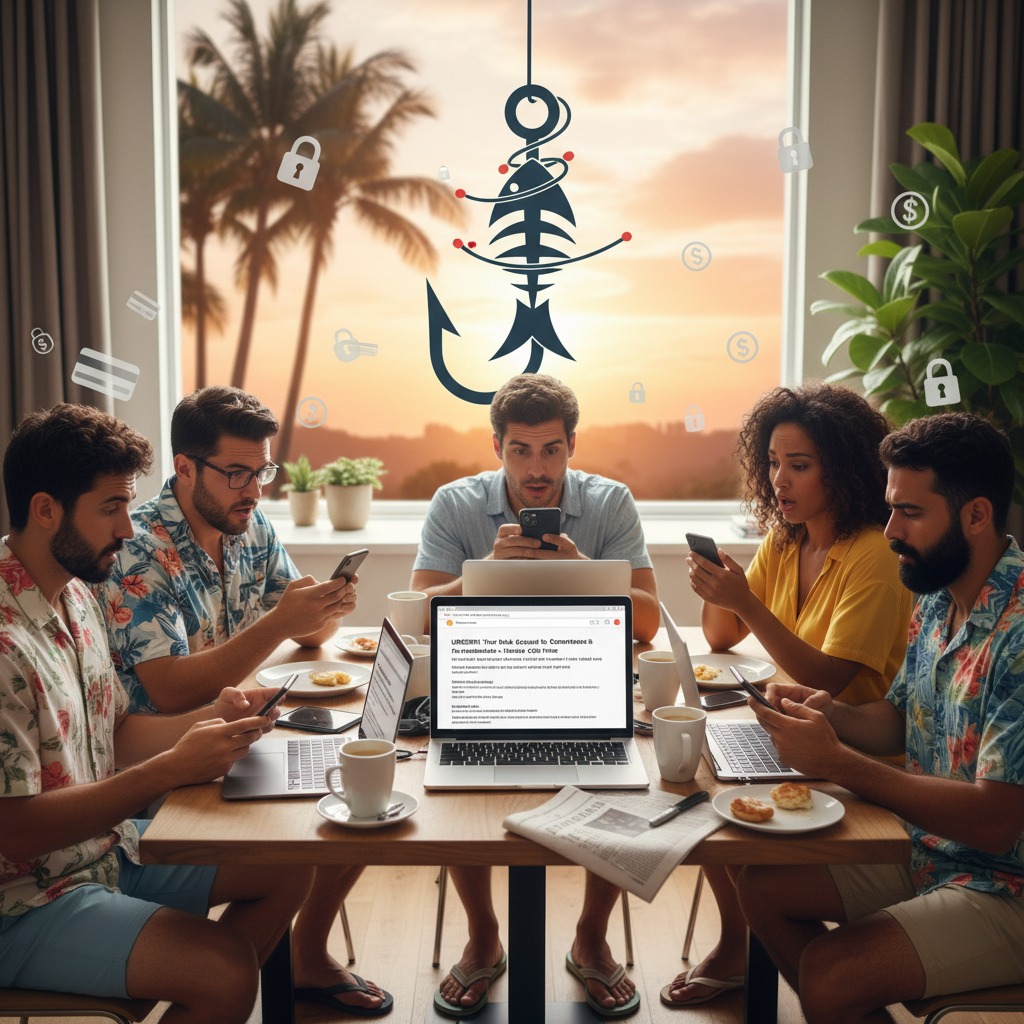
They lure you in pretending to be trusted sources. Then trick you into revealing sensitive information like passwords or financial data. Phishing is a cyber scam where criminals use email or malicious websites to steal your information. According to the FBI Internet Crime Complaint Center (IC3) 2025 Internet Crime Report, Floridians reported losses of over $12 million to phishing. That’s a significant uptick from the previous year with victims reporting roughly $4 million in losses.
Phishing schemes started showing up in the mid-1990’s and have remained a staple in the cybercrime playbook ever since. And as with most cybercrimes, phishing methods have become increasingly sophisticated over time. The FBI recently warned the public about an emerging Phishing-as-a-Service platform called Kali365. It’s targeting users of popular Microsoft 365 products, including Outlook, Teams, and OneDrive. This platform allows cybercriminals to capture access tokens and bypass multi-factor authentication without needing a user’s password. You can learn more about the latest cyber scam warning here: IC3 PSA Kali365
“Kali365 is yet another reminder that threat actors continue to adapt in a constantly shifting landscape,” said FBI Tampa Cybercrime Supervisory Special Agent Tim Callinan. “Human behavior remains the most vulnerable point in any cybersecurity strategy. It is the responsibility of every organization to provide continuous workforce training, enforce strong password standards, and wherever possible, mandate the use of physical hardware tokens to ensure robust multi-factor authentication.”
Preventing internet-enabled crimes and intrusions requires each of us to be aware and on guard.
If you or someone you know is a victim of cyber-enabled crime or fraud, file a complaint with the FBI’s Internet Crime Complaint Center at ic3.gov. Crime reports are used for investigative and intelligence purposes. Rapid reporting can also help support the recovery of lost funds.