


How the FBI keeps the public safe at gatherings
The countdown to the special event has finally struck zero. Stragglers jog towards the entrance. Employees and volunteers take their posts while participants put on their game faces.
The men and women of the FBI assigned to the event sharpen their focus and pay attention—to everything.
“We are ready to respond anytime, anywhere, to whatever the world throws our way,” said Assistant Director Devin J. Kowalski of the FBI’s Critical Incident Response Group (CIRG).
The Bureau plays a critical role in keeping everyone safe at public gatherings defined as “special events” by the U.S. Department of Homeland Security. Qualifying events can be almost any kind of public gathering: parades, local fairs, music festivals, foot races, concerts, awards shows, and sporting events, just to name a few.
A federal working group determines the appropriate level of security for special events, based on a review of anticipated media coverage, the expected number of participants and spectators, the presence of high-ranking officials or celebrities, any symbolic meaning to the nation, and other factors.
The FBI’s role is to support the local law enforcement and other agencies that have jurisdiction, largely through intelligence and resource-sharing. The FBI typically staffs an onsite command post for larger events, such as the Super Bowl or FIFA World Cup 2026TM.
“We dedicate resources to support our partners who are primarily responsible for the security of the event,” Kowalski said. “Based on the particular needs of a department that is covering the event, they may have requests for assistance or for some specialized capabilities that the FBI and CIRG can provide.”
Before the event, the FBI organizes and prepares intelligence, sets plans for a command post, screens people for special access, and reviews logistics for deploying people and resources.
“That requires extensive coordination with international, federal, state, and local partners,” said Acting Unit Chief Christopher Tarrant of CIRG’s Crisis Management Unit. Coordination includes threat briefings, reviews of cases for subjects who may pose threats, and exercises and training for all who will be on hand.
Depending on the magnitude of the special event, the FBI may spend months or even years preparing. For FIFA World Cup 2026TM, the FBI began planning in March 2024. The focus is on gathering, analyzing, and sharing intelligence about potential threats and strengthening partnerships.
Pivoting from prevention to readiness
The FBI and its partners try to do as much as possible before the event to prevent any problems. Once the event is underway, the FBI changes its posture from prevention to watchfulness, with an eye to reaction.
“When a special event begins, the FBI enters a real-time operational status with all specialized personnel deployed ready for a rapid response,” Tarrant said.
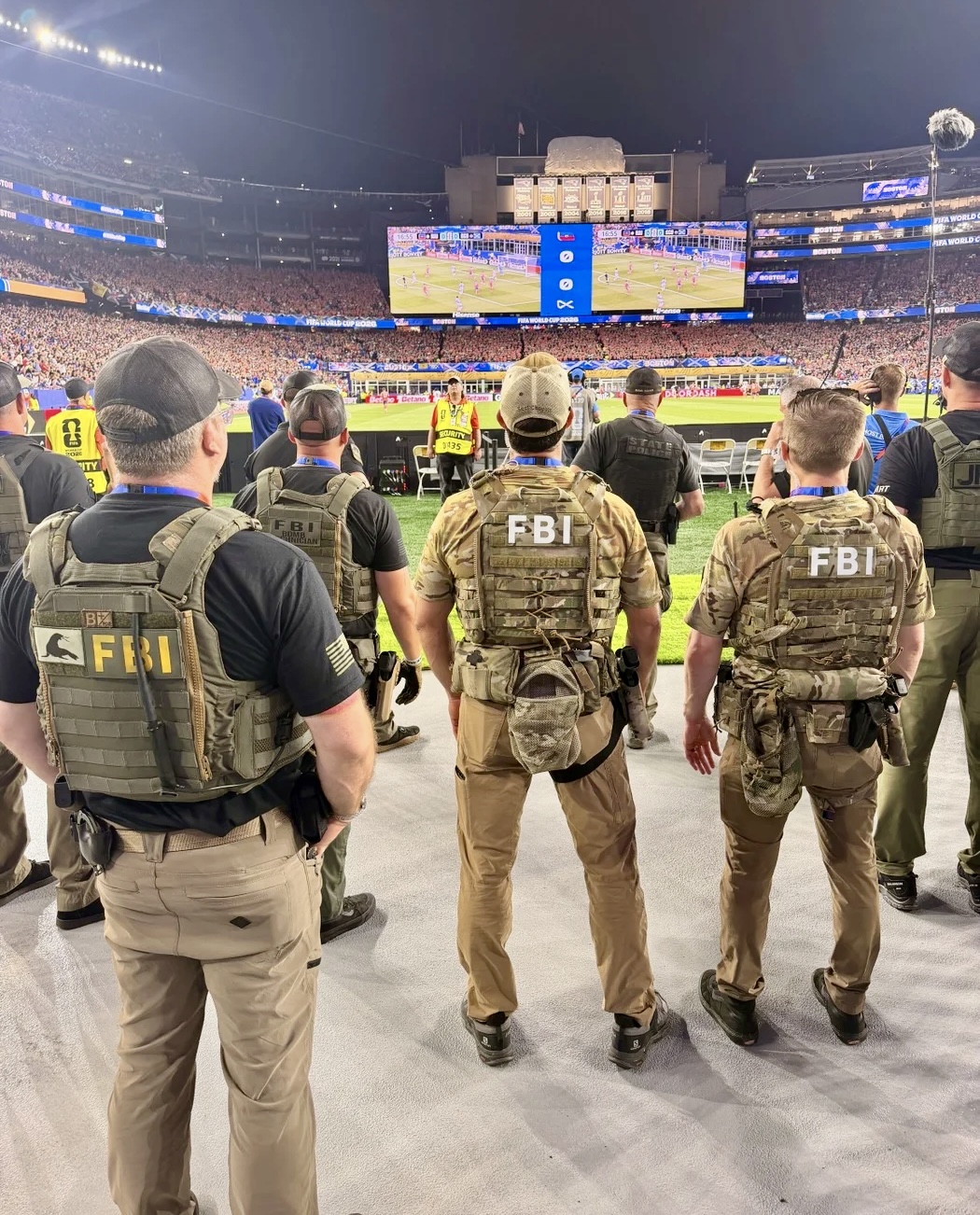
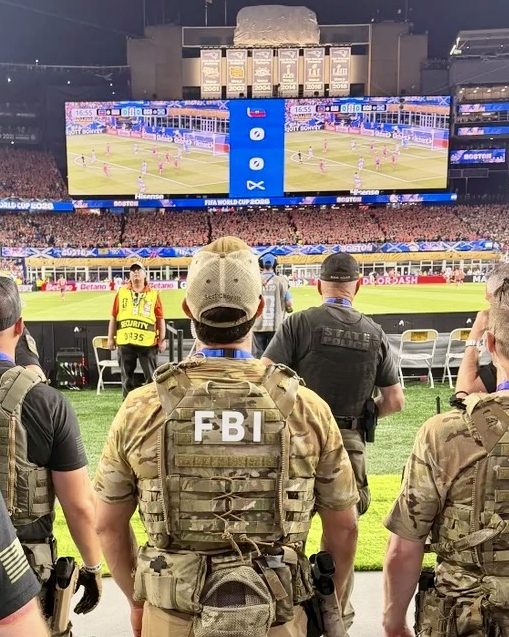
The FBI also prepositions resources at or near venues. That usually includes special agents, intelligence analysts, and professional staff with expertise in counterterrorism, criminal and cyber threats, crisis management, and weapons of mass destruction.
It may also include bomb technicians, drone detection and mitigation teams, tactical ground teams, aviation teams, and communication specialists.
Special equipment may include communication equipment, including radios or mobile command posts, utility vehicles, tactical equipment and vehicles for emergency response, gear to detect and mitigate threats from drones, robots, emergency medical equipment, planes and helicopters, and explosive-detecting dogs.
Communication within the FBI and between the Bureau and its local, state, and federal partners is obviously critical. The FBI tests communication methods and continuously evaluates them during the event.
During the event, the FBI conducts risk assessments on intelligence and potential threats. Risk assessments include considering what constitutes an immediate threat to life or emergency.
The FBI also continues to share intelligence and threat-related concerns with state, local, and federal partners. Those agencies with jurisdiction determine what actions to take.
“During a special event, specialized personnel are in place for a rapid response for any incident that occurs,” Tarrant said. “Specialized personnel are allowed to deploy or activate in certain circumstances. If additional personnel are needed, requests are relayed to supervisors, who will make the determination and deploy additional resources.”
Many of the people working under the FBI’s banner during a special event are members of FBI joint task forces and are federally deputized. They work with local and state law enforcement at events, looking for suspicious people, groups, or vehicles. As task force members, law enforcement partners have federal authority, as well as authority from their own agencies.
Potential problems are shared and discussed immediately, Tarrant said. “Depending on the concern, the appropriate law enforcement agency responsible can act,” he said.
Common security issues include unattended bags, which must be examined by law enforcement. Threatening social media posts are also monitored and evaluated to assess credibility and potential for harm.
“That requires immediate threat mitigation efforts by law enforcement,” Tarrant said. “The person could be located anywhere or physically traveling when the threat was made. If a person is already mobile, the resources needed to mitigate the threats increase significantly.”
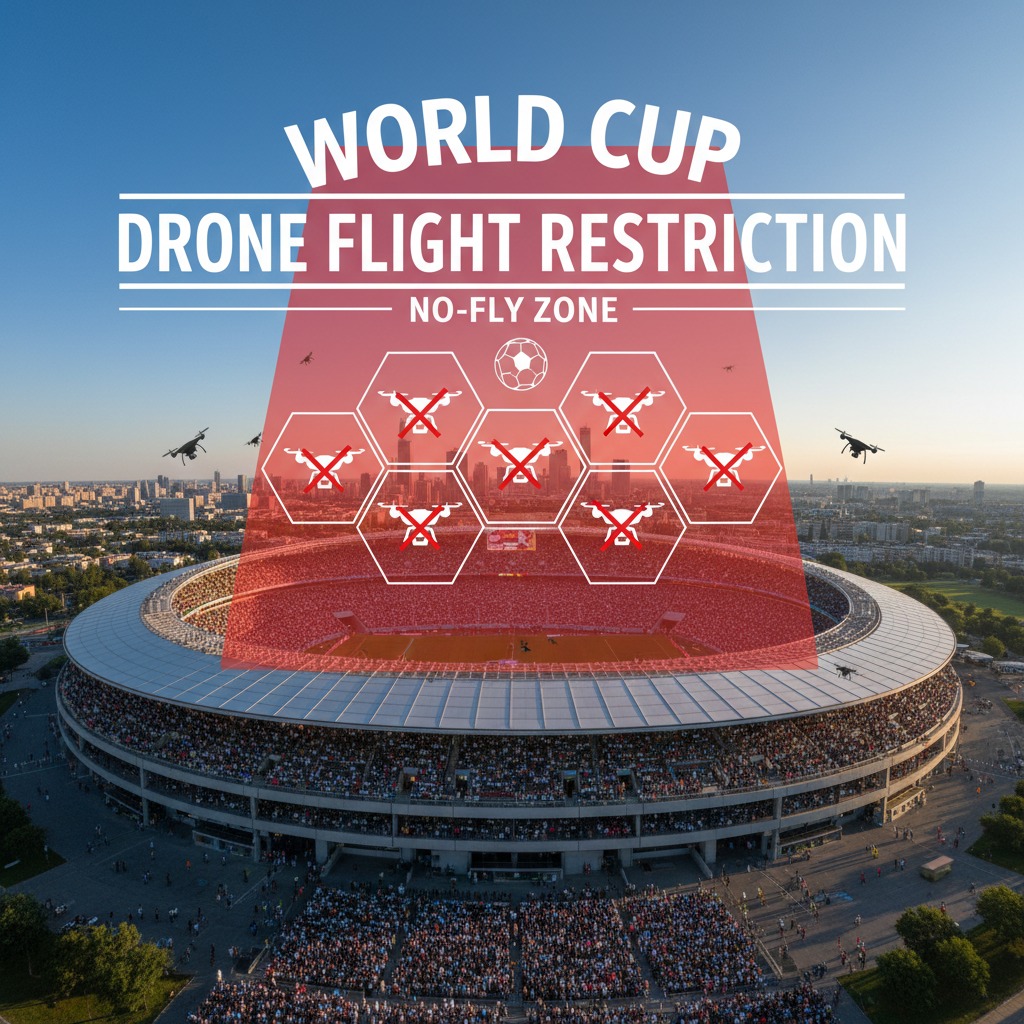
Drones continue to be a growing problem at special events, including the World Cup. The federal government established no-drone zones around each venue. However, a week before the final match, the FBI had already detected nearly 1,600 illegal drones.
“What you’re seeing now is the most comprehensive airspace security and drone mitigation effort in U.S. history,” said Meghan King, a supervisory special agent in charge of the crisis management program at the FBI Boston Field Office. “We are utilizing cutting-edge technology to detect drones flying in restricted airspace, mitigating the threat they pose, and seizing them from operators in an effort to keep both the skies and the public safe.”
Boston hosted seven World Cup games.
Ideally, fans and participants will never know the FBI is present at an event.
“We’re doing our job as the fans come and go and everybody just enjoys the game and there’s no issues,” said Kurt Taves, an assistant special agent in charge in the FBI Miami Field Office. Taves is leading the office’s World Cup efforts.
Miami hosted six FIFA World Cup 2026TM games, as well as the upcoming Bronze Medal game on July 18.
“We want to be bored on game day,” Taves said. “We want the excitement to be on the pitch.”
Resources
- Podcasts:
- Stories:
- Resource Page: How We Investigate — Tactics